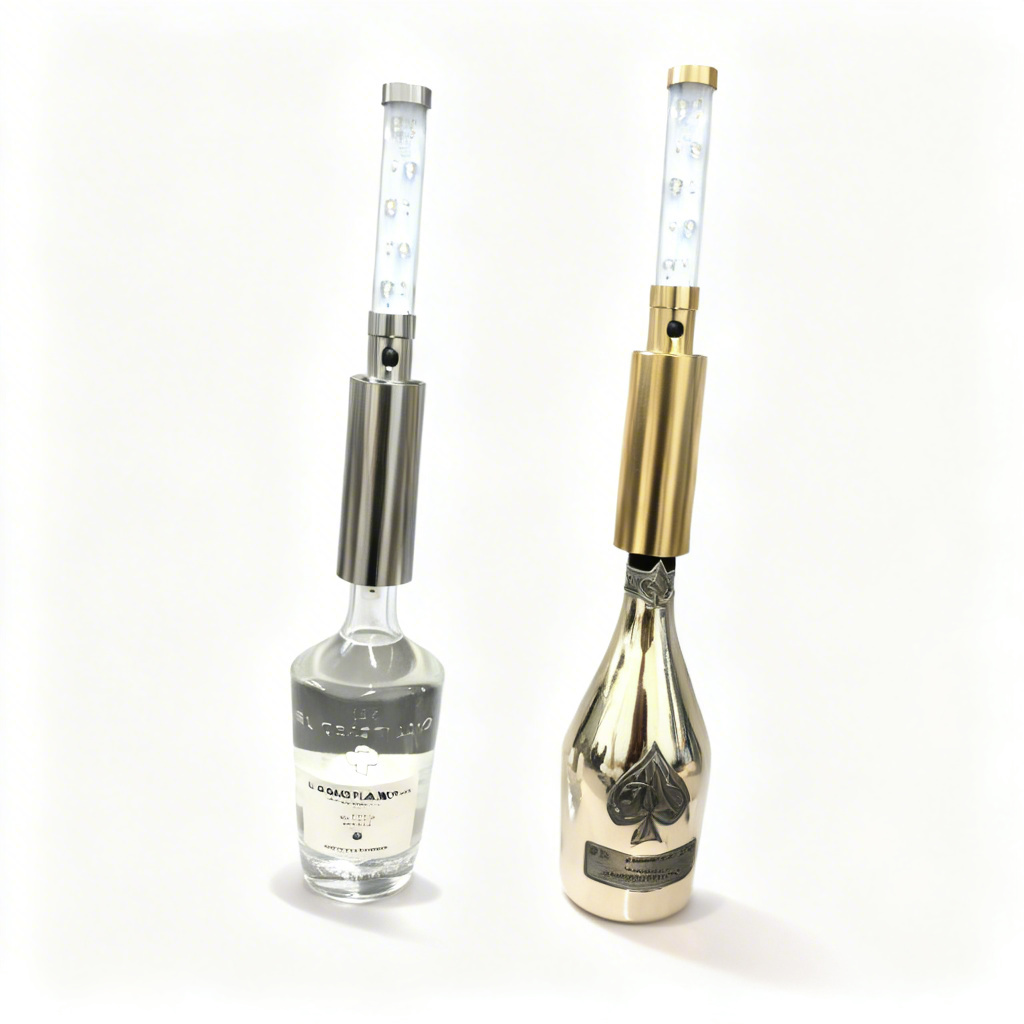
When the lights dim and the music drops, nothing commands attention quite like a burst of shimmering light cutting through a darkened nightclub. Party sparklers have become one of the most iconic elements of the modern nightclub experience, transforming an ordinary bottle service moment into a memorable spectacle that guests will talk about for weeks.
But using party sparklers in a professional venue setting is not as simple as lighting a sparkler in your backyard. There are safety protocols, legal considerations, product specifications, and presentation techniques that separate a flawless execution from a potential disaster.
Whether you are a nightclub owner looking to elevate your guest experience, a bottle service manager standardizing your procedures, or an event coordinator working with venues for the first time, this guide is built for you. We have put together a comprehensive list of everything you need to know before incorporating party sparklers into your nightclub environment. From choosing the right product to training your staff, you will walk away with the confidence and knowledge to make every sparkler moment count.
The economics of party sparklers in bottle service are straightforward once you understand the psychology driving them. When a server carries a lit bottle through a crowded room, every guest within eyeline stops, stares, and instinctively evaluates their own experience by comparison. That split-second reaction is the revenue engine.
Bottle service parades with champagne bottle sparklers do not just celebrate one table; they advertise to every other table simultaneously. The golden sparks, the procession of staff, the reaction of the receiving guests, all of it communicates status and exclusivity at volume. Neighboring tables feel the social pressure immediately. Industry operators consistently describe the same pattern: one theatrical bottle arrival prompts nearby guests to flag down their host and upgrade their own order within minutes. The sparkler becomes a silent salesperson working the entire floor.
Venues tracking sparkler nights against standard presentation nights report bottle service sales increases of 20 to 30 percent on average. Beyond the immediate order spike, operators have noted a measurable halo effect lasting 30 to 45 minutes after each presentation, during which the surrounding crowd remains in an elevated, celebratory spending mindset. At spirits-focused venues deploying theatrical presentations for featured SKUs, some operators have documented sales surges reaching 278 percent above normal benchmarks for that bottle. The spectacle effectively turns the product into the promotion.
At tables carrying minimums of $2,000 and above, the math guests face is steep. Bottle markups routinely run five to ten times retail price, and that gap requires emotional justification. The sparkler parade provides it. Guests are not simply buying spirits; they are buying a moment that photographs well, signals status to the room, and creates a story worth sharing. The theatrical presentation transforms a transaction into an experience, which is precisely why premium venues treat it as a non-negotiable element of their bottle service program rather than an optional flourish.
Fire sparklers remain the industry standard for bottle service presentations, and understanding their operational realities is essential before committing to them at scale.
Specifications and Attachment
Standard bottle sparklers measure 4 to 6 inches in length, with 4-inch models burning approximately 30 to 40 seconds and 6-inch models delivering up to 60 seconds of spark effect. That burn window is deliberately engineered for service flow: long enough to traverse a crowded room and generate attention, short enough to extinguish before guests grow impatient or safety windows close. According to product specifications from leading nightclub sparkler suppliers, attachment is handled through dedicated safety clips or wire holders that grip the bottle neck securely, replacing earlier improvised methods like rubber bands that created unstable presentations and increased burn risk.
Cost Structure and Recurring Expenses
Bulk pricing typically falls in the $1 to $2 per unit range, with high-volume cases scaling lower per unit through tiered wholesale discounts. For a busy Friday night venue running 30 to 50 bottle presentations, that cost appears negligible against premium table minimums. The operational reality is different. Single-use deployment generates continuous restocking costs, storage requirements, shipping overhead, and waste from defective units or over-ordering. These recurring expenses compound across a full season and should be factored into bottle service margin calculations.
Indoor Liability and Safety Training
Open flame, smoke, ash fallout, and airborne sparks create measurable liability exposure in enclosed venues. Sparks can trigger fire alarms, stain surfaces, and cause burns to guests or staff. Several jurisdictions actively restrict indoor sparkler use, and insurance carriers are increasing scrutiny following high-profile incidents. Six-inch champagne bottle sparklers require strict handling protocols: staff must maintain safe distances from guests, avoid excessive movement speed that flings hot debris, and follow venue-specific extinguishing procedures. Training is not a recommendation; it is a non-negotiable operational requirement that directly determines liability exposure.
The US retail fireworks market is projected at approximately $953 million by 2026, with nightclub and hospitality bulk purchases representing a meaningful commercial segment served by dedicated wholesale suppliers.
Where traditional fire sparklers fall short on safety and consistency, rechargeable LED batons and bottle toppers fill the gap with precision. These flameless units deliver strobe, color-changing RGB, and pulse effects that are visually competitive with fire in a darkened room, and they run for 6 to 12+ hours on a single charge. That runtime means a fully charged unit can cover an entire Friday and Saturday night shift without interruption, compared to the 30 to 60 seconds you get from a single-use pyrotechnic sparkler.
The cost structure is equally compelling. A quality LED unit runs approximately $25 upfront, which appears steep against a $1 to $2 fire sparkler. However, that math flips quickly. By use eight to ten, the LED unit has already paid for itself relative to the recurring spend on disposables, and every presentation after that is pure savings. For a high-volume venue running 20 to 40 bottle presentations on a busy weekend, the operational savings compound fast. You can explore a detailed cost breakdown comparing LED vs. fire sparkler ROI to model the numbers against your own venue volume.
The operational cleanliness advantage is just as significant as the cost argument. LED units produce no smoke, no ash, no burn risk, and zero single-use waste. In venues with strict fire code compliance requirements, particularly in markets like New York, Los Angeles, and Miami, that distinction is not cosmetic; it is the difference between a compliant program and a liability exposure.
Perhaps the most underutilized advantage is branding consistency. LED units with remote-controlled RGB settings can be color-matched to your venue palette, a resident DJ brand, or the specific spirits brand being presented. A tequila bottle parade executed in the brand's exact blue or gold is a level of visual cohesion that fire sparklers fundamentally cannot replicate. For venue operators building brand partnership revenue alongside bottle service, that customization capability has direct commercial value.
Finally, the sustainability angle is gaining traction beyond marketing language. Venues pursuing ESG commitments or managing partnerships with sustainability-focused spirits companies are under increasing pressure to reduce single-use waste across operations. Switching to rechargeable LED options is a tangible, measurable action. According to current guidance on LED sparklers for nightlife venues, reusability is increasingly cited by operators as both a cost driver and a brand alignment tool, particularly as premium spirits companies formalize their own environmental benchmarks for venue partnerships.
Beyond the operational considerations covered in previous sections, fire sparklers carry significant legal and insurance exposure that operators in major nightlife markets cannot afford to ignore.
Market-by-Market Regulatory Reality
The regulatory landscape for indoor sparkler use varies sharply by city, but the trend lines are consistently toward stricter enforcement. In New York City, the FDNY has made its position explicit: bottle sparklers are illegal indoors in bars, clubs, and restaurants, full stop. The department actively recommends LED and laser alternatives to achieve compliant special effects. In Los Angeles, all personal fireworks including sparklers are prohibited within city limits and across much of LA County, with violations carrying fines, confiscations, and potential criminal liability. In Miami-Dade County, outdoor consumer use may be permitted on certain holidays, but indoor use triggers Florida Fire Prevention Code requirements including pyrotechnic permits, advance fire marshal notification (often 30 days minimum), and documented safety protocols for assembly occupancies.
Injury Data Driving Regulatory Pressure
The CPSC reports approximately 1,700 emergency room-treated sparkler injuries annually. More critically, total fireworks-related injuries reached an estimated 14,700 in 2024, a 52% spike from the prior year, with burns accounting for 37% of all injuries. Hands, fingers, and facial injuries are the most common. These statistics are driving active enforcement by fire departments in nightlife districts, not passive rule-setting.
Insurance Exposure Operators Miss
Standard general liability and hospitality policies increasingly treat indoor open-flame sparkler use as either a coverage exclusion or a premium surcharge trigger. Carriers may deny claims arising from pyrotechnic incidents classified as high-hazard activities, leaving venues exposed to direct liability on guest injuries, property damage, and third-party claims. Operators should audit their existing GL policy language specifically for fireworks and flame-effect exclusions before the next bottle service shift, not after an incident.
The Compliance Case for LED Alternatives
LED and flameless bottle service displays sidestep this entire regulatory category. Because they produce no open flame, no combustion byproducts, and no pyrotechnic classification, they require no fire marshal permits in most jurisdictions and carry no sparkler-related insurance carve-outs. For multi-location hospitality groups operating across NYC, LA, and Miami simultaneously, standardizing on LED illuminated presenters eliminates the operational complexity of managing city-specific fire code compliance across every property.
The most sophisticated bottle service programs in operation today do not choose between fire and LED. They deploy both, strategically, with each element assigned to the context where it performs best.
Leading venues reserve traditional fire sparklers for outdoor patios, rooftop terraces, and jurisdictions where indoor flame use is permitted under local fire codes. For enclosed floor service, where regulations are stricter and ceiling clearances are tighter, rechargeable LED solutions take over. This division of labor keeps the program compliant across all operational areas while ensuring every bottle parade, regardless of venue zone, still delivers a visual moment worth capturing on a phone.
The real power of a hybrid setup emerges when both elements appear together in a single presentation. A fire sparkler generates live, cascading sparks and kinetic energy that no LED can fully replicate. A custom illuminated base or branded LED sign adds structure, sustained glow, venue branding, and 360-degree visibility that a sparkler alone cannot provide. The combined visual footprint is dramatically larger than either element achieves independently, which translates directly into more heads turning, more phones raised, and more organic social content created at tables you do not control.
The most cohesive approach integrates both elements into a single display piece. Custom illuminated bottle presenters built with dedicated sparkler holders eliminate the improvised, inconsistent look of two separate props being juggled by one server. The fire sparkler mounts cleanly into the holder at the top of the presenter, while the illuminated base glows below with your venue logo or brand graphic. Staff handle one unified piece instead of two, which improves safety and presentation quality simultaneously.
Layering music synchronization onto this setup elevates the parade from a visual moment to a fully choreographed experience. Remote-controlled RGB LED components on glorifiers and bottle presenters can shift colors, trigger strobe effects, or pulse in response to DJ cues timed to a birthday drop or peak energy moment. When your lighting operator and DJ coordinate the LED sequence with the sparkler ignition, the result is a production-level moment that feels exclusive, rehearsed, and worth every dollar of a premium table minimum.
Executing hybrid setups consistently requires documented staff protocols that assign clear roles before any parade begins. Designate one team member to manage LED remote activation and timing, and a separate team member responsible for sparkler ignition and parade routing. The parade route itself must account for both live flame clearance and the lit signage being carried through the room. Staff should never handle alcohol service while managing an active sparkler, and extinguishing materials must be staged at the bar before any fire element is ignited. Venues that treat these protocols as standard operating procedure, rather than situational reminders, are the ones that run hybrid setups night after night without incident.
TikTok and Instagram Reels built around bottle parades consistently outperform virtually every other category of nightlife content, and the reason is structural. Motion, high-contrast light trails, crowd audio, and the anticipation of a spectacle combine into a format that stops scrolling instantly. Algorithms on both platforms reward content with strong early engagement, and a sparkler moving through a dark room generates that engagement in the first two seconds. Venues that understand this dynamic do not treat sparkler moments as incidental; they treat them as content productions that happen to include a bottle delivery.
Optimal footage captures the bottle and sparkler in frame alongside the crowd reacting simultaneously. A slightly elevated, wide angle accomplishes this by providing enough context for viewers who were not present to feel the energy of the room. Phones held flat at table height produce tight, unflattering clips; a raised position near the DJ booth or a mezzanine railing frames the parade against the full scale of the venue. Staff or dedicated in-house photographers should be positioned and briefed before the delivery begins, not scrambling to capture it after the sparkler has already burned down.
Venues that brief servers on pacing, route, and energy levels produce footage that edits cleanly and posts consistently. An improvised parade can lose momentum halfway through the floor, deliver the bottle to a table with no crowd witness, or miss the DJ sync entirely. A choreographed route that passes through the dance floor, loops past high-visibility areas, and arrives at the table on a musical cue creates a repeatable mini-show. Repeatability is what turns a one-off video into a content library.
Custom LED signs displaying the venue logo or a guest's name transform a standard parade into a personalized event. When a guest sees their name lit up in color-matched LEDs during their birthday delivery, they film it themselves and post it without any prompting. That guest-generated content carries credibility that no in-house video can replicate, and it reaches networks the venue could never access through paid advertising. Custom bottle service presenters built with integrated sparkler holders and illuminated bases make this identity layer a permanent feature of every delivery rather than an occasional upgrade.
A single shareable sparkler video functions as an unpaid marketing asset that works continuously after posting. Venues with strong bottle service content report booking inquiries arriving through direct messages and comment sections within hours of a post going wide. Industry data supports a 20 to 30 percent lift in bottle sales following dramatic service presentations, and the social proof carried by viral footage reinforces those numbers over time. According to guidance on building bottle service programs, theatrical presentation is among the highest-leverage investments a venue can make in its marketing, because the content costs are essentially zero once the operational system is in place.
Where individual sparklers and LED batons handle the moment of delivery, integrated LED bottle service displays handle everything else: the build-up, the brand impression, the recurring visual identity that guests associate with premium tables night after night. These are purpose-built systems, not assembled workarounds, and they represent the top tier of what a bottle service program can look like in 2025 and beyond.
A fully integrated unit brings together illuminated bases, custom-shaped acrylic or metal signage, dedicated sparkler holders, and remote-controlled RGB LEDs into a single cohesive display. Every element is engineered to work together rather than cobbled from separate vendors. The result is a presentation that reads as intentional and premium rather than improvised, which matters enormously when you are defending a $2,000+ table minimum against every other option in the room.
Hypemakerz designs and manufactures these systems to order from its Miami-area facility, with construction standards matched specifically to working nightclub conditions. Rechargeable batteries, shatter-resistant polycarbonate and reinforced metal finishes, color-matched RGB LEDs with remote control, and builds tested to survive drops, spills, and the general chaos of a high-volume Friday night. These are not display-case pieces; they are operational tools built for repeated nightly use across long service windows.
Custom shapes are where the program moves from functional to memorable. Venue logos, spirits brand marks across champagne, vodka, tequila, and cognac categories, and bespoke silhouettes all translate directly into acrylic and LED form. Every bottle delivery becomes a branded impression, reinforcing identity with every parade rather than simply lighting up a generic tray.
For spirits brands and distributors, glorifiers and back-bar signage built around sparkler holder integration convert shelf space into active marketing. Premium back-bar real estate in competitive venues is difficult to win and harder to hold; a custom illuminated display with integrated sparkler functionality creates a visible reason for placement that a static bottle or printed insert cannot match.
Hospitality groups managing multiple properties gain a structural advantage from standardized custom display systems. Consistent visual identity across every venue, from Miami to Las Vegas to Dubai, communicates scale and intentionality rather than the mismatched look that commodity products produce. Repeatable designs, quick replenishment, and uniform LED programming mean every property delivers the same premium presentation regardless of location or staff.
Five decision points should guide every venue operator toward the right sparkler configuration before spending a dollar on inventory or equipment.
Fire code compliance comes first, without exception. Check your local fire authority and review your insurance policy before evaluating any other factor. The FDNY has explicitly stated that bottle sparklers are illegal in NYC bars, clubs, and restaurants. Similar indoor open-flame restrictions apply across California jurisdictions and many other major markets. If your carrier flags pyrotechnics, you are not choosing between fire and LED on preference grounds; LED or flameless is the only operationally responsible path, full stop. Attempting to run fire sparklers under a policy that excludes them creates liability exposure that no bottle parade is worth.
Volume determines your LED payback window. At roughly $1 to $2 per fire sparkler versus an upfront LED investment that recoups in approximately 8 to 10 uses, the math strongly favors high-volume operations. A venue running 50 presentations on a Saturday night will recover its LED investment within weeks. A lounge running fewer than 10 presentations weekly will see that payback period stretch considerably longer, making bulk fire sparklers a financially defensible short-term choice in compliant markets.
Customization value compounds over time. A commodity sparkler burns for 45 seconds and disappears. A custom LED bottle service sign featuring your venue logo delivers brand reinforcement on every single use across years of service.
Match product tier to table minimum. Bulk fire sparklers are appropriate at $500 minimums, but a $2,000-plus VIP experience demands a display that justifies the price point visually and experientially.
Multi-venue operators and spirits brand activation programs should engage a custom fabrication partner rather than a commodity bulk supplier from the start. Scalable, branded solutions built to your specifications create consistency across locations and support long-term program development that a generic product line cannot match.
Party sparklers are not a decoration. They are a documented revenue mechanism that venues in every major nightlife market deploy specifically because they work, driving measurable sales lifts of 20 to 30 percent and triggering buying surges that last 30 to 45 minutes after each presentation. Any bottle service program that treats them as optional is leaving real money on the floor.
The direction the industry is moving is no longer ambiguous. Fire code pressure, insurance exposure, and the experience expectations of VIP guests spending $2,000-plus at a table have all converged to accelerate the shift toward LED and hybrid integrated systems. Venues that have not started that transition are operating on borrowed time, both regulatorily and competitively.
Running commodity fire sparklers on every service without a structured upgrade path compounds risk without building anything durable. There is no brand equity in a generic sparkler clip, no recurring social media asset, and no protection against the liability exposure that open flames inside a licensed venue now carry.
Custom integrated LED bottle presenters, sparkler holders, and branded glorifiers solve all three problems simultaneously. They deliver the visual impact that drives sales, they survive the operational demands of a working nightclub, and they put your venue's identity at the center of every bottle parade.
Hypemakerz builds exactly these systems, custom to your venue, from their Miami facility. Contact them directly for a quote on integrated LED displays, sparkler holders, and glorifiers engineered specifically for your program.
Party sparklers can transform an ordinary nightclub moment into something truly unforgettable, but success depends on preparation. Keep these key takeaways in mind: always choose sparklers specifically rated for indoor use, train your staff thoroughly on safety and lighting procedures, understand your local fire codes and venue regulations, and focus on presentation to maximize the guest experience.
The difference between a spectacular show and a serious incident often comes down to the details. Cutting corners on product quality or skipping safety protocols simply is not worth the risk.
Now is the time to audit your current setup, source the right products, and build a sparkler service your guests will rave about. When done correctly, sparklers do not just light up a room. They create the kind of memories that keep guests coming back night after night.
!