Cold Sparklers vs. Traditional Bottle Sparklers: Which Setup Is Right for Your Nightclub?
Every operator wants the bottle-service delivery to feel electric. The question is how you create that moment without creating a liability. Cold spark machines and traditional bottle sparklers both deliver the spectacle, but the choice between them runs deeper than looks. It touches fire code, per-night cost, staff training and, in some cities, whether you're allowed to use open flame at all.
There's no universal right answer. Your room size, your service volume, your local fire marshal and your budget all push the decision in different directions. This guide gives you a practical framework for choosing, plus a third option most comparisons skip: reusable LED sparklers.
Why This Decision Is Harder Than It Looks
From across the room, cold sparks and traditional sparklers look similar. That's where the similarity ends. They sit under different rules, carry different liability and demand different levels of operational investment. Get it wrong and you're looking at a fire marshal shutdown mid-service, or an equipment purchase your volume can't justify.
The regulatory stakes are real. The 2003 Station nightclub fire in Rhode Island killed 100 people and permanently changed how U.S. fire codes treat entertainment venues. Post-2003, the major model codes require automatic sprinklers in nightclub-type occupancies at roughly 100 occupants, a far lower threshold than before. If you treat sparkler selection as a purchasing decision rather than a compliance decision, you're starting from the wrong place.
Scale is the other variable. A 200-capacity lounge running 15 bottle deliveries a night is in a completely different position than a 1,500-capacity room pushing 80.
How Each Option Actually Works
Traditional bottle sparklers are wire-core pyrotechnics coated in a combustible compound. Once lit, they burn hot, throw open sparks and shed ash until the compound is spent. There's no off switch. The effect ends when the sparkler ends, not when your staff decide it should.
Cold spark machines heat a metallic powder (typically zirconium- or titanium-based) and fire the particles upward through a nozzle. The particles cool quickly and, used correctly, are far less likely to ignite surrounding materials. The big operational difference: staff can start and stop the effect at any moment.
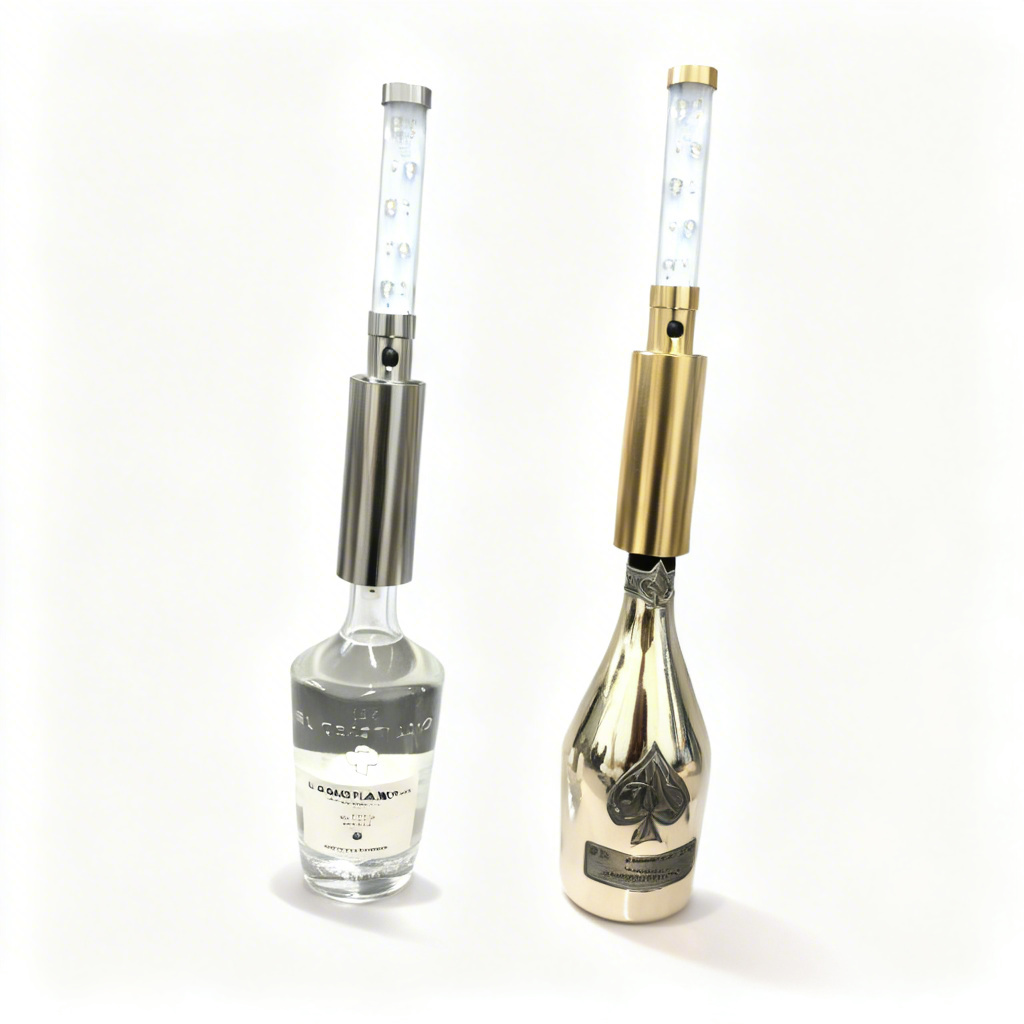
LED sparklers produce no flame, sparks or ash at all. They clip onto the bottle, light up on demand and get recharged and reused night after night. You trade the real-fire look for zero ignition risk.
On equipment: traditional sparklers need nothing but a lighter. Cold spark machines need a capital purchase or rental, proprietary refill powder and training before first use. LED sparklers are a one-time purchase with no consumables.
Fire Code and Compliance: The Factor That Overrides Everything
Traditional sparklers face the steepest legal exposure. They're open-flame pyrotechnics, and many jurisdictions restrict or ban them in enclosed venues. After the fatal New Year's bar fire in Switzerland, the Massachusetts State Fire Marshal issued a direct warning to bars and clubs about sparkler use in crowded rooms with combustible finishes.
Cold spark machines sit in a gray zone. Manufacturers often market them as non-pyrotechnic, but classification isn't uniform. Some jurisdictions treat them as fireworks that require permits or a licensed operator. What a manufacturer calls the product doesn't decide how your local authority classifies it.
Local verification is mandatory everywhere. Miami, New York, Los Angeles and Las Vegas each have their own Authority Having Jurisdiction (AHJ), and enforcement can differ even within one metro area.
The liability is lopsided. If your fire marshal has classified your equipment as prohibited, using it can mean fines, insurance problems and personal exposure for the operator.
Before you buy anything, send a written inquiry to your local fire prevention bureau asking how both technologies are classified at your address and what permits apply. Get every answer in writing. If open flame is off the table, LED bottle sparklers keep the moment without the risk.
Cost: Per Night, Equipment and Refills
Traditional sparklers are pure consumables. No hardware, nothing to maintain, and you can buy from multiple suppliers. For a new bottle program, that simplicity is worth something. We sell champagne bottle sparklers by the box for exactly this use.
Cold spark machines require real upfront spend, then proprietary powder every night. Powder is often manufacturer-specific, which creates lock-in and stockout risk during peak season.
LED sparklers cost more per unit than a single traditional sparkler, but you buy them once and reuse them every night.
Volume decides it. At high nightly volume, cold spark per-delivery costs can come out ahead. At low volume, payback stretches out and the case gets weak. Build a 30-day model using your actual delivery count. It'll tell you more than any vendor pitch.
What the Floor Actually Sees
Traditional sparklers give a warm, slightly unpredictable burn that guests read instantly as "celebration." That live-fire energy carries across a crowded room.
Cold spark machines throw a taller, more uniform fountain. It's consistent, and it films the same way every time. That's why high-volume rooms where every delivery ends up on someone's story tend to like them.
LED sparklers are the most controllable. They're the right call when you need the visual cue with no fire at all, or as a backup for tables near low ceilings or drapes.
Whatever creates the spark, it only lasts seconds. The hardware around it carries the moment. An illuminated bottle presenter with your logo or the guest's name keeps the table lit and on camera long after the sparks die.
Setup and Staff Training
Traditional sparklers are quick to train. Staff need a safe lighting technique, the right way to attach the sparkler to the bottle and your venue's burn-safety protocol.
Cold spark machines need structured onboarding. That means clearance distances from guests, ceilings and fabrics, powder loading, startup and shutdown, and basic troubleshooting. Manufacturers publish minimum ceiling heights and clearances. Check those against your actual table layout, because low ceilings may rule out half your sections. Nozzles and powder chambers also need regular cleaning.
LED sparklers need almost no training. Charge them, clip them on, switch them on.
Nightlife staff turnover is constant. Whatever you choose, write the procedure down and put it into new-hire onboarding.
The Decision Framework
- Under ~300 capacity, light bottle volume: Traditional sparklers (where permitted) or LED sparklers. Cold spark hardware is hard to justify, and a full fountain can overwhelm a small room.
- Large room, heavy bottle volume, AHJ-approved: Cold spark machines can pay off. Per-delivery costs fall as volume rises, and the consistent effect films well.
- Strict-code markets or low ceilings: Don't run any pyrotechnic effect without written fire marshal approval. LED sparklers are the safe default.
- Brand-first presentation: The spark is one layer. The bottle presenter, sign and parade carry equal weight in what guests see and share.
Before You Buy Either Option
- Get written AHJ confirmation. Ask your fire marshal how traditional sparklers and cold spark machines are classified at your address and what permits apply. Verbal "you're probably fine" is not protection.
- Audit your space. Measure ceiling heights and clearances at every primary bottle-service table.
- Model 30 days of real cost. Use your actual deliveries per night.
- Plan the full presentation. Decide what carries the moment before and after the spark: presenters, signs, the parade.
- Document and train before go-live. File your approval, write the procedure, and train staff before the first service night.
The Bottom Line
Compliance comes first, then volume, then budget. High-volume rooms with approval can make cold spark pay. Smaller rooms do better with traditional sparklers where they're allowed, and LED sparklers wherever they're not.
Whichever effect you run, the table is what guests remember. Stock up on sparklers, pair them with a custom LED bottle presenter built in Miami with your logo, and get a quote to see a custom proof before production.